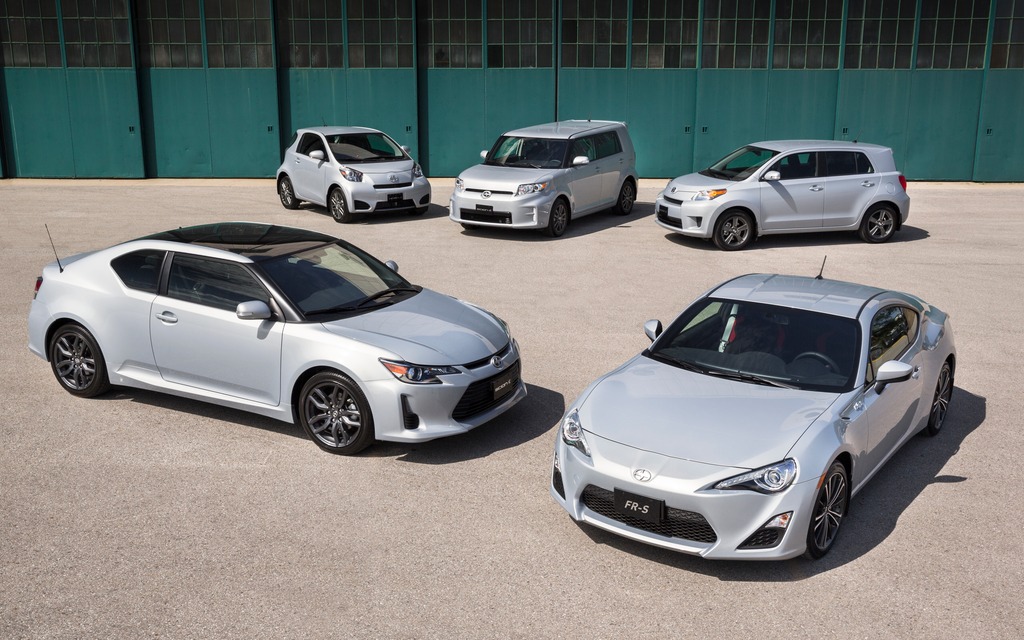
The Scion brand debuted for American buyers in 2004, before expanding into Canada a couple of years later. Intended to be Toyota’s new stylish compact brand focused on attracting younger buyers, Scion would eventually be discontinued in 2016 and absorbed back into Toyota. Annual sales initially looked promising, peaking in 2006 with over 170k units sold, before eventually falling well below 100k units after 2008. In total, Scion offered eight distinct models during its existence, with the tC and xB receiving two generations during their respective product life cycles.
While most North American consumers only knew these vehicles as Scions, the majority of them were in fact sold in Japan and other markets as Toyotas. In reality, the Scion lineup was far from a unique home grown investment, but simply an isolated selection of rebadged Toyota models to be exported to the U.S. Here’s a deeper look into the Toyota model origins behind every Scion model produced.

Scion xA = Toyota Ist
The xA was a tiny plasticy entry level five door hatchback that launched alongside the xB and tC for Scion’s debut year. In Toyota’s home market of Japan, it was sold as the Toyota Ist between 2002 and 2007, while also being exported to the Middle East as the Toyota xA. The Ist featured a unique front grille with a specific badge in its home market, but otherwise the Scion version imported to America was unchanged. The Scion xA was the weakest seller of the three initial models, which resulted in the xA only lasting a single generation before being replaced by the similarly sized Scion xD in 2007.
Scion xD = Toyota Ist / Urban Cruiser
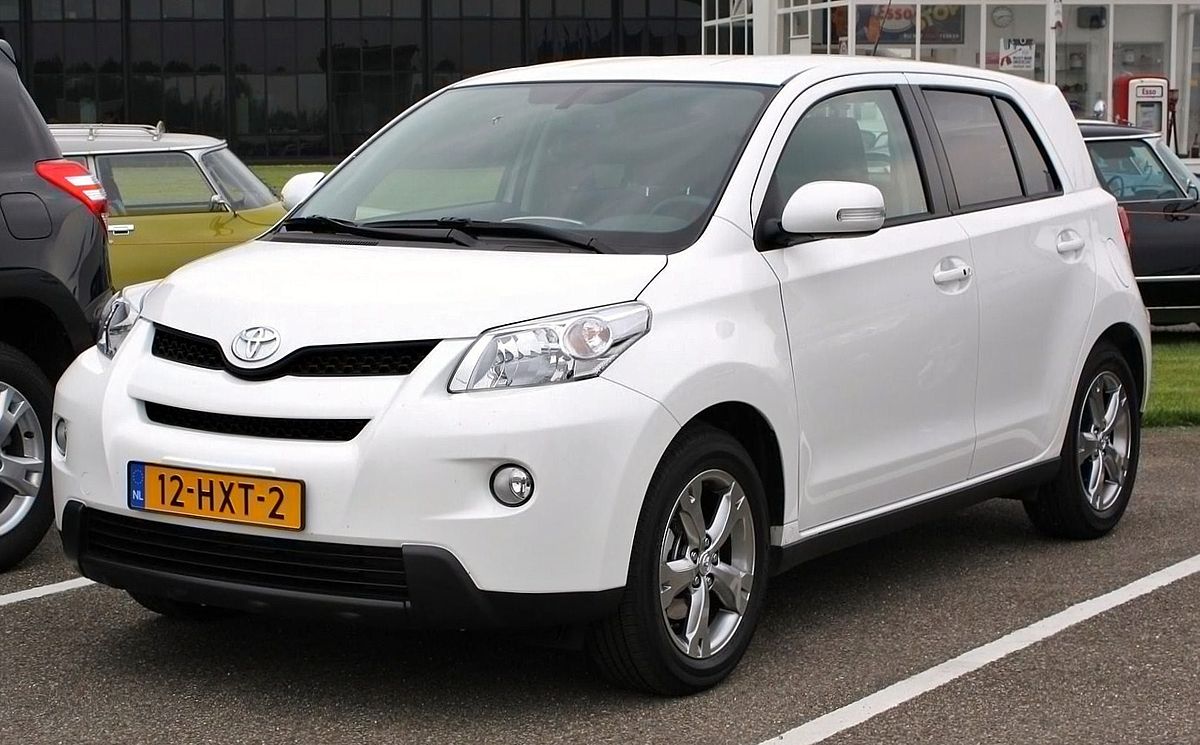
As mentioned, the Scion xD debuted as a new model in North America for 2007, but back in its home market of Japan, it continued being sold simply as the second generation of the Toyota Ist. Additionally, Toyota expanded model exports to Latin America and Europe where the same vehicle was sold as the Toyota Urban Cruiser (pictured above). Similar to the xA before it, differences for the Scion xD were limited to front end grille and badging nuances on the Toyota variants. The vehicle was discontinued in all markets by 2016, with North America getting the Scion iA sedan as a replacement for the compact hatchback.

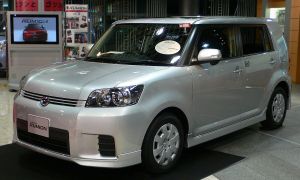
Scion xB = Toyota bB / Corolla Rumion / Rukus
The Scion xB was perhaps the most iconic model sold during Scion’s history. Due to its narrow boxy styling and relatively tall appearance, it was frequently nicknamed “the toaster”. The xB was the second best selling Scion model with two distinct generations developed, meaning it was one of the two Scion models to be sold continuously during the brand’s 13 year tenure, alongside the tC coupe. As with the other Scion hatchbacks, the xB was an export variant of existing Toyota models spread across various markets.
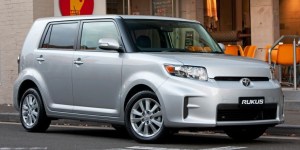
The first generation xB was sold as the Toyota bB in the Japanese market with minimal changes. The larger second generation xB debuted around 2007 and was sold as the Toyota Corolla Rumion for the Japanese market and, starting around 2010, as the Toyota Rukus for the Australian market. The Scion xB was intended to be replaced by the Scion iM starting around 2015, but the forthcoming closure of the Scion brand resulted in both models being sold in parallel as Scion production ceased and dealers sold off all remaining inventory.

Scion iQ = Toyota iQ
The iQ was a tiny four seater city car sold by Scion for only a few years, and it was the only Scion to carry the exact same model name as the Toyota it was based on. Yes, seriously, this car had four seats, not that you would recommend such torture to any passengers. Other than the late production Scion iA and iM models, the iQ was the lowest production Scion model with under 16k units produced. The iQ was sold in Japan with various engine options and a choice of transmissions, while the Scion variant was only sold with a 1.3 liter four cylinder engine and a CVT automatic transmission. The iQ is most famous for being the basis of one of the most iconic compliance cars of all time, the Aston Martin Cygnet. Along with the Smart Fortwo, the Scion iQ was the only sub-compact city car sold in the U.S. market at the time.

Scion FR-S = Toyota GT86
When Toyota introduced their new co-developed sports car into the market, they used the Scion brand to deliver the product to their U.S. buyers instead of selling it as the Toyota GT86 that the rest of the world received. The two cars were identical, along with the Subaru BRZ that also reached U.S. buyers at the same time. You could argue that the FR-S is the only Scion that still lives on today, as Toyota absorbed the FR-S into their model lineup as the Toyota 86 starting around 2016, later receiving a second generation model as the Toyota GR 86. The Scion FR-S, Toyota GT86 / 86 / GR 86, and Subaru BRZ have been highly praised by enthusiasts seeking an affordable and reliable sports compact coupe, with heavy aftermarket support and tunability.
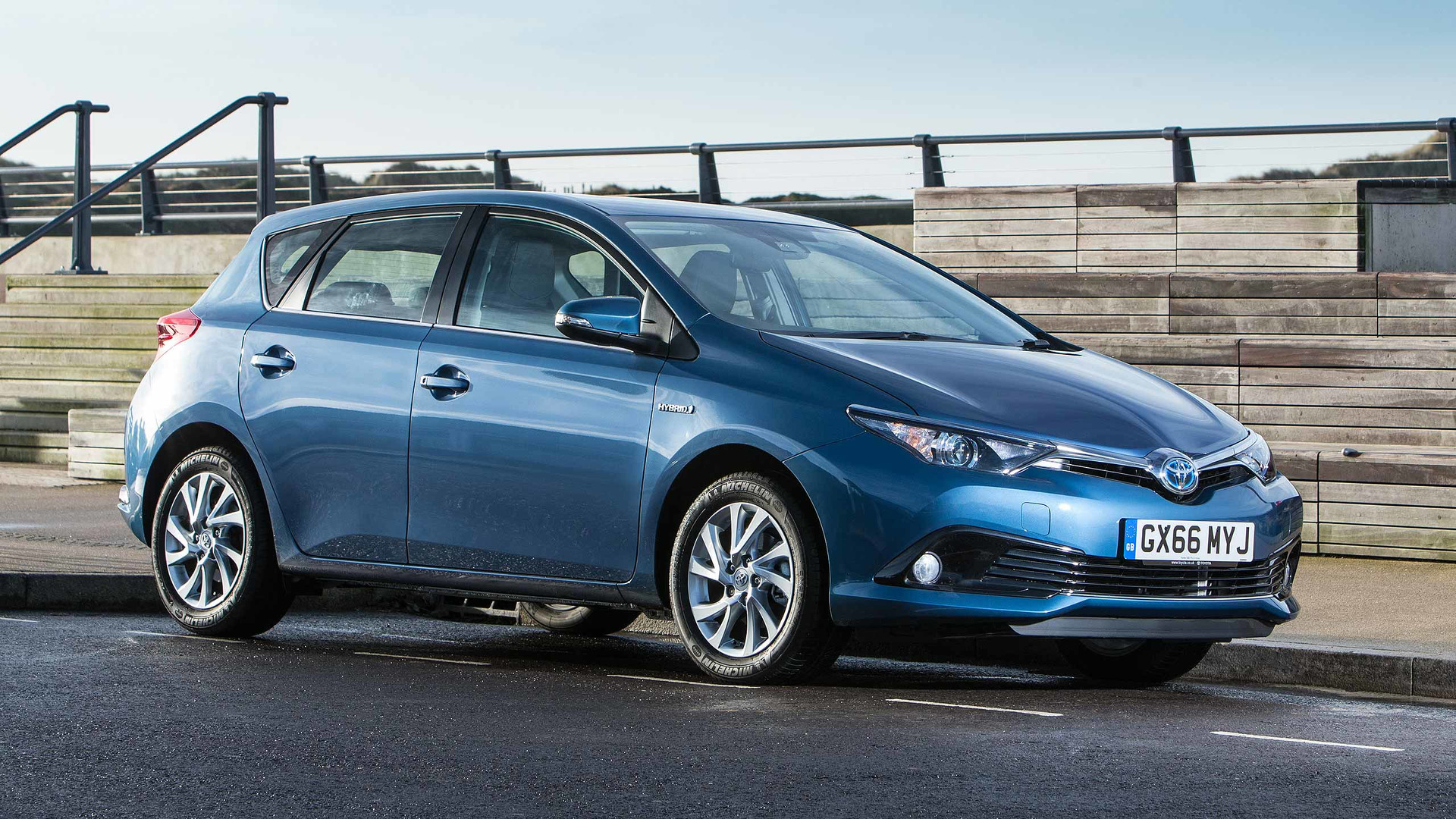
Scion iM = Toyota Auris
The Scion iM had an interesting and unfortunate history in the U.S. market. The new hatchback first debuted as a somewhat flashy concept car in 2014, then later hit the market in production form only for the Scion brand to announce its discontinuation in 2016. This left Scion with only one model year of sales for their new iM model, which was simply a rebadged Toyota Auris from the European market. Rather than take a full loss on the newly introduced U.S. model, Toyota decided to simply rebadge the car as the Toyota Corolla iM from 2017 onward. The Corolla iM served as a brief holdover product, only being sold for two model years before Toyota replaced it with the fully new Corolla hatchback. This puts the Scion iM and Toyota Auris into a rare category of vehicles that went through a full circle of rebadging. It started life as a Toyota, got rebadged as a Scion, then re-rebadged to a Toyota for the same market.

Scion iA = Mazda2
Another Scion that was too little too late was the iA sedan. This was Scion’s first sedan and oddly enough, it was the only Scion not based on a Toyota model. In fact, the Scion iA was a rebadged third generation Mazda2 sedan. Some may remember that the Mazda2 was actually sold in the U.S. market only as a hatchback until 2014, but never offered again from Mazda directly. The Mazda2 technically reached U.S. buyers later on, but only as the Scion iA for one model year in 2016, just before the brand shut down. As the Toyota brand started repurposing the leftover Scion models, they temporarily rebadged the Scion iA as the Toyota Yaris iA, seeing as there was no Yaris sedan offered as the time for U.S. consumers. After declining sales in America, Toyota would discontinue the Yaris model family entirely after the 2020 model year, moving buyers into slightly larger vehicles like the Corolla and Corolla Cross.

Scion tC = Toyota Zelas
Starting in 2010, Toyota began selling the second generation Scion tC coupe as the Toyota Zelas in China, Middle East, and other developing markets. It was identical to the Scion variant exported to the U.S. and remained on sale until the demise of Scion around 2016. Interestingly, the first generation Scion tC was the only Scion produced as a fully independent model with no Toyota version sold in other markets. The Scion tC arrived during the brand’s debut in 2004 and became the most highly produced Scion model, likely justifying Toyota’s decision to invest in selling the second generation tC in other markets as the Zelas.
Looking back, the Scion brand can be thought of as an interesting marketing experiment from Toyota. They probably would have been better off simply selling the cars under the Toyota brand to begin with and investing in fresher products rather than lazy rebadged versions of budget models from their home market. The FR-S was an unexpected choice to inject some excitement into the Scion brand, operating as an attainable halo model, but it failed to keep buyers interested enough in the other lackluster models like the xD, iA, and iM. Luckily, Toyota has now refocused their approach to targeting younger buyers by offering several award winning sporty products like the GR Corolla, GR 86, GR Yaris, and the co-developed fifth generation Supra. As it turns out, attracting young enthusiast buyers works a lot better when you invest in well engineered performance vehicles, instead of low thrill plasticy hatchbacks.